Spring Home Maintenance Checklist: 15 Checks That Prevent Costly Repairs
Key Takeaways
- Fences and gates are the single most-booked spring maintenance job on Alfie, ahead of garden prep, locks, and every other item on this checklist.
- The median cost of a real fence or gate job booked through Hey Alfie is £800, typically ranging from £400 to £1,550.
- Draughty windows and doors can add 10 to 15% to your annual heating bill, according to the Energy Saving Trust, worth fixing before next winter, not after.
- A properly insulated loft (at least 270mm deep) can save a typical semi-detached home £150 to £200 a year, paying for itself within 2 to 3 years.
- Book tradespeople early. Fences and garden work hit peak demand in late April and May, so don't wait until June if you want it sorted before summer.
Spring is the ideal time to give your home a proper check up, whether you're a new homeowner or you've owned your property for years.
We looked at real spring bookings on Alfie. Fences and gates are the single most requested job, accounting for 29% of all spring maintenance bookings, nearly a quarter more than the next most common category, garden and lawn prep.
We've put together 15 spring home maintenance checks below, covering everything from your roof to your shed, with time estimates, typical costs and advice on when to call a professional.
Here's what we'll cover:
Exterior home checks
1. Check your roof for damage
Time: 15–20 minutes | Professional inspection: £150–£350
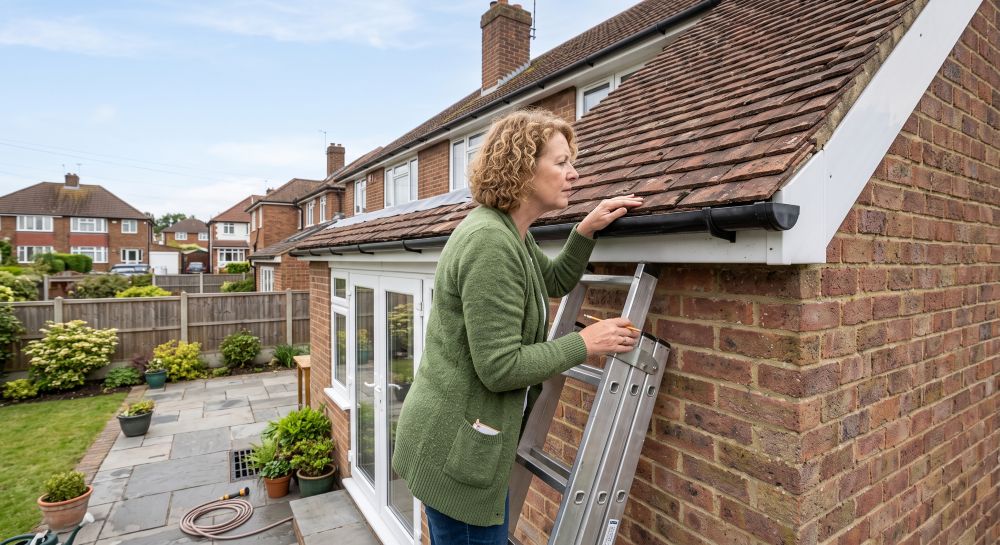
Start from ground level, with binoculars if you have them. Look for slipped, cracked or missing tiles, damaged flashing around chimneys or skylights. Sagging areas, or anything that simply looks out of place could indicate a roofing problem.
2. Clear gutters, downpipes and drain covers
Time: 1–2 hours | Professional clean: £100–£500
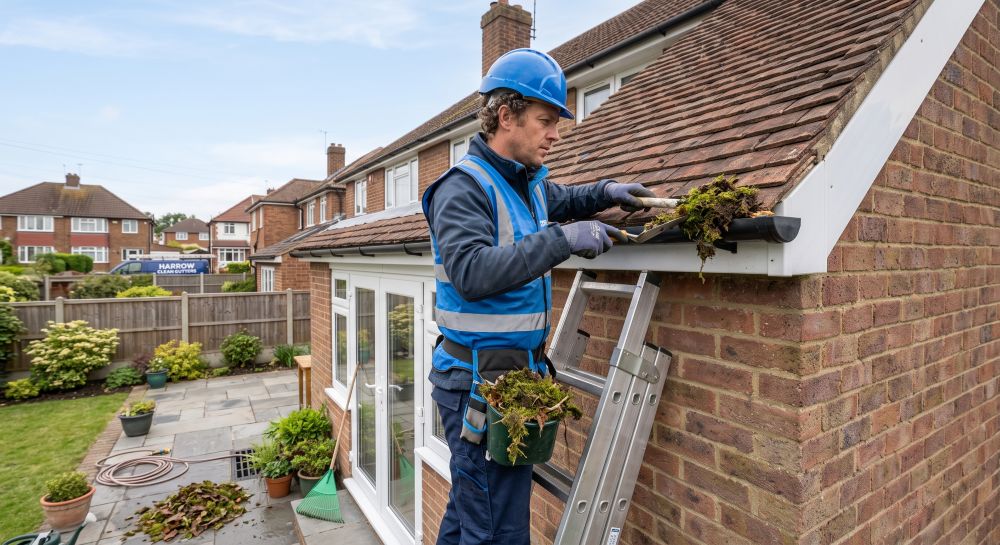
Blocked gutters are one of the most damaging (and most overlooked) maintenance issues a homeowner faces. Left unchecked, they force water back against the fascia, into the roof structure and down external walls. In spring, clear out gutters, downpipes, drain covers and gullies. While you're at it, check gutter joints for leaks and inspect the fascia boards behind for rot.
3. Inspect brickwork and external walls
Time: 30–45 minutes | Basic inspections: £150-£300
Walk slowly around the outside of your home. Check for cracks, crumbling mortar, blown render, staining, damp patches or areas where water is sitting. Small cracks may only need monitoring or minor sealant repair. But larger cracks should be assessed by a RICS-accredited surveyor before you touch them.
4. Check windows and doors
Time: 30–45 minutes | Basic window frame repair: £150-£400
Cold weather, rain and wind can damage window seals, frames and paintwork. Check all windows and external doors for cracked or missing sealant around frames, rotten timber, draughts and condensation. It's best to fix small issues early, as large window and door problems can be expensive. Plus the Energy Saving Trust estimates that draughty windows and doors can add 10–15% to annual heating bills.
5. Inspect fences, gates and boundaries
Time: 20–30 minutes | Panel replacement: £50–£150 each
Fences are the number one spring maintenance request on Alfie. Check every fence post for movement at the base. Look for cracked or warped panels, lifted gravel boards and loose gate hinges. Concrete spurs can extend the life of a deteriorating timber post if the rest of the panel is sound.
6. Clean patios, paths and driveways
Time: 1–3 hours | Professional pressure washing: £80–£200
Moss, algae and compacted winter grime make outdoor surfaces genuinely slippery, a particular hazard for older homeowners. Sweep, wash or pressure-clean patios, steps, decking and paths. Check also for cracks and uneven slabs which should be re-laid.
7. Check outdoor lighting, security and external fittings
Time: 30–40 minutes | Professional check: £100–£200
As evenings get lighter, outdoor lighting is easy to overlook. Test security lights, porch lights and garden lighting. The National Police Chiefs' Council identifies working external lighting as one of the most effective deterrents against opportunistic burglary. While you're outside, also take 10 minutes to inspect aerials, satellite dishes and external cables for any issues.
Garden and outdoor preparation
8. Tidy lawns, beds and planting areas
Time: 2–4 hours | Gardener: £25-£50 per hour
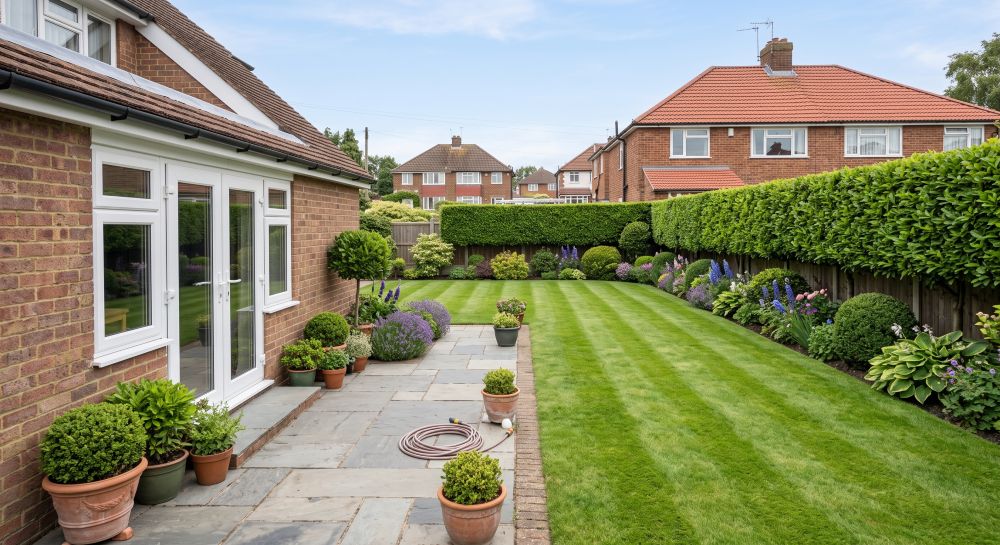
Spring is the right time to clear leaves, fallen branches and dead growth from lawns, beds and borders. You can also reseed bare or patchy lawn areas (April–May gives the best germination conditions), add compost or mulch to beds, and prune roses and late-flowering shrubs. If you notice bird nests, it's worth knowing: under the Wildlife and Countryside Act 1981, it is an offence to intentionally damage or destroy an active bird's nest.
9. Check trees and large shrubs
Time: 20–30 minutes | Tree surgeon: £200–£1,000+ depending on work
Look for broken branches, leaning trunks, damaged limbs or trees growing too close to the property. Overhanging branches can damage roofs, gutters and windows during high winds, and if a branch falls on a neighbour's property, liability can be complicated.
10. Check outdoor taps and hoses
Time: 15–20 minutes | Tap replacement: £50–£150 including labour
If outdoor taps were unprotected during freezing temperatures, check them before using them again. Look for leaks at the tap body or at the internal connection, reduced pressure or drips when fully closed. A leaking outdoor tap left unnoticed all summer wastes a significant amount of water and can cause damp at the base of an external wall.
Interior home checks
11. Look for signs of damp and mould
Time: 30–45 minutes | Independent damp survey: £150–£300
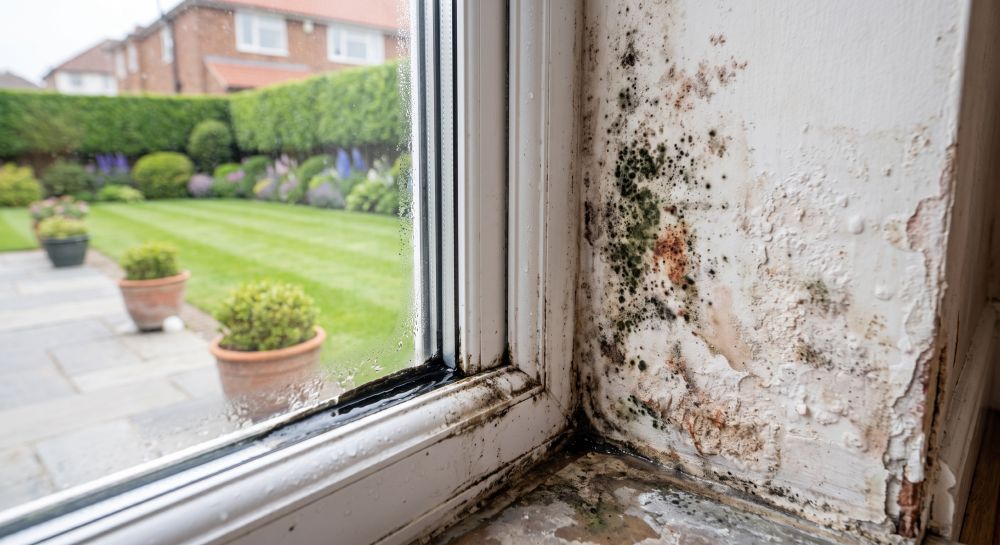
People usually don't spot damp until it's already a problem. Check behind furniture, inside cupboards, around windows and in corners, particularly north-facing walls and rooms with poor ventilation. Look for: black mould patches, musty smells and peeling wallpaper or lifting paint. It's best not to paint over damp, always identify the source. The NHS advises that damp and mould can cause respiratory problems and other health issues, particularly for children, older people and those with existing conditions.
12. Improve ventilation
Time: 20–30 minutes | Extractor fan replacement: £40–£120
Homes kept closed all winter trap moisture indoors. As the weather improves, open windows and ventilate regularly, even 10 minutes each morning makes a measurable difference. Check extractor fans in kitchens and bathrooms: remove the cover, clean out the dust (a clogged fan is effectively useless), and confirm it's drawing air. Most broken extractor fans can be replaced easily. Also make sure trickle vents on windows are open.
13. Inspect your loft
Time: 30–45 minutes | Insulation top-up: £300–£600 professionally installed
If you can access your loft safely, check for: water marks or staining on the felt or rafters (evidence of a past or current roof leak), signs of pests (droppings, gnawed insulation, nesting material), daylight coming through the roof structure, and compressed or patchy insulation. Loft insulation should be at least 270mm deep per current Building Regulations guidance. The Energy Saving Trust estimates that a properly insulated loft can save a typical semi-detached home £150–£200 per year on energy costs and a top-up typically pays for itself within 2–3 years.
Safety and security checks

14. Review locks and entry points
Time: 20–30 minutes | Lock upgrade: £50–£200 per door
Test every lock on external doors, windows, garage doors and side gates. Confirm each lock engages properly and keys turn smoothly. Replace anything loose, stiff or unreliable. The Home Office recommends five-lever mortice deadlocks on external timber doors (BS 3621 compliant) and key-operated locks on ground-floor windows.
15. Inspect sheds, garages and outbuildings
Time: 30–45 minutes | Shed repair: £500+
Outbuildings like your sheds and garages take a battering over winter. Check outbuilding roofs, locks, windows, doors and flooring for damage. Look specifically for: leaks or water staining on the ceiling or walls (felt roofs on sheds typically last 10–15 years), signs of rodents (droppings, gnawed materials, nesting) and damp patches on internal walls. Prevention here is ideal since large shed repairs can be very expensive.
When to call a tradesperson?

Some spring maintenance jobs need a qualified professional. Get expert help if you encounter any of the following:
- Roof damage or suspected leaks — don't climb up yourself
- Any gas work or boiler issues — Gas Safe registered engineers only
- Electrical faults — NICEIC or NAPIT-registered electricians
- Structural cracks or movement — RICS-accredited surveyor
- Persistent damp or mould — independent damp specialist
- Unsafe or overhanging trees — Arboricultural Association-approved tree surgeon
- Blocked drains you can't clear — drainage specialist
- Damaged chimney stacks or high external fittings — specialist at heights
A small professional repair sorted in spring is almost always cheaper than the damage that quietly compounds through summer and autumn.
Frequently asked questions
When is the best time to do a spring home maintenance check?
March to May is ideal, after the worst of winter weather has passed but before summer. Don't wait until June; tradespeople reach peak capacity in late April and May, particularly for fences and garden work.
How long does a full spring home check take?
Set aside half a day, roughly 4 to 6 hours for a thorough walk-round of an average three-bedroom home, inside and out. It doesn't need to happen on a single day.
How much should I budget for spring home maintenance?
For a typical UK home, budget £200–£500 for routine preventative maintenance: a gutter clean, sealant repairs, a boiler service, minor fence work. If a tradesperson is needed for a larger job, repointing, roof repair, structural crack assessment, costs typically range from £500 to £2,000. Early detection almost always keeps costs at the lower end.
Does my home insurance require me to maintain my property?
Yes. Most UK home insurance policies contain a maintenance clause. Failure to carry out reasonable upkeep can be grounds to reduce or reject a claim. Keeping records of seasonal maintenance, dated photos, receipts, notes, protects you if you ever need to make one.
What's the best way to stop damp?
One of the most common questions homeowners ask Alfie in spring. The answer depends on the type: condensation damp needs better ventilation; penetrating damp needs the external source identified and fixed (gutters, pointing, sealant, render); rising damp is less common than often claimed and needs proper diagnosis before treatment.
Alfie's final thought
A few hours in spring, walking around your home slowly, inside and out, looking at what winter has done, can prevent the kind of expensive, stressful, urgent repair that nobody wants to deal with in August.
Always start with inspecting yourself. But if you need a hand, Alfie is here.
External references: Gas Safe Register, Energy Saving Trust, RoSPA, Association of British Insurers, NHS – Damp and Mould, Wildlife and Countryside Act 1981, BCIS Rebuilding Cost Calculator.