How Much Does a Bathroom Renovation Cost in the UK? (2026 Guide)
Key Takeaways
- Average UK bathroom renovation cost (2026): £5,500–£8,500 for a standard family bathroom (MyJobQuote)
- Labour share of total cost: 45–60% (MyBuildAlly)
- Most expensive single decision: moving the toilet (adds £800–£2,500) (MyBuildAlly)
- Contingency to set aside: 10–15% of total budget
- Typical project duration: 7–10 working days (no layout changes) (BestBuilders)
- Property value uplift: approximately 4–6% (Primethorpe Paving)
- ROI: 50–70% (Primethorpe Paving)
Based on real Hey Alfie bathroom renovation quotes in 2026, a full bathroom renovation typically costs between £4,500 and £10,500, with a median of £7,500. Costs range from small refreshes around £500 up to full luxury overhauls past £25,000.
Bathroom renovations are one of the most common home improvement projects in the UK - and unfortunately, one of the easiest to get wrong on budget. The price gap between a like-for-like suite replacement and a full layout redesign is enormous, and a lot of what drives the final bill only becomes visible once the tiles come off the wall.
We’re not fans of those types of surprises, so we’ve put together this guide that gives you real 2026 figures, broken down by bathroom type, so you know what to budget before anyone sets foot through your door.
What Does a Bathroom Renovation Cost in 2026?
The honest answer is: it depends. But here are the ranges you should be working with:
These figures are drawn from real Hey Alfie bathroom renovation quotes in 2026, and assume no structural changes (moving walls, extending the room) and no underfloor heating or designer brassware.
A note on expectations: research by the Federation of Master Builders found that seven in ten UK homeowners underestimate bathroom renovation costs, and around a quarter believe a full renovation can be completed for under £5,000. In 2026, that figure rarely reflects the reality of labour-intensive work, structural surprises, and quality materials.
At Hey Alfie, our own bathroom renovation quotes in 2026 range from £520 for small repair-scope jobs up to £28,000 for full luxury overhauls, with a median of £7,500 for full-scope renovations, right in line with what most homeowners report spending. Most full-scope work lands firmly in the mid-range, but all sorts of decisions can push costs well above or below that, especially when it comes to choosing who tackles the labour, and the actual layout of your upgraded bathroom.
Where Does the Money Actually Go?
Most homeowners focus on the suite - the bath, toilet, and basin they've been browsing online. But actually, the suite is typically only a fraction of the total spend. Labour accounts for 45–60% of a typical bathroom renovation budget (MyBuildAlly, 2026).
A standard mid-range bathroom pulls in multiple trades: a plumber, a tiler, an electrician, and often a plasterer. Each trade has its own day rate, and in a small space, they can't always work simultaneously, meaning that coordination time adds up.
Here's a rough breakdown for a standard family bathroom renovation at around £7,000:
The Single Biggest Cost Variable: Layout
The most expensive decision you'll make in a bathroom renovation is whether to move the toilet. The soil pipe - the large 110mm waste pipe that connects the toilet to the main drain - is expensive to reroute. Moving a toilet even a short distance can add £800–£2,500 to the bill on its own, involving lifting floorboards, running pipe through joists, and ensuring the correct drainage gradient. (MyBuildAlly, 2026; BestBuilders, 2026).
If you can keep your existing layout, do. It's the single easiest way to keep costs down without compromising on your upgrade dreams!
Hidden Costs That Catch People Out
Even well-planned bathroom renovations throw up surprises once the strip-out begins. Older UK homes in particular often hide problems behind dated tiles and vinyl flooring. Common unexpected costs include:
Rot in floor joists. Water ingress over years - often from a poorly sealed shower tray or old bath sealant - can cause structural damage to the timber joists beneath the floor. Repairing this adds both cost and time to the project.
Old or non-compliant plumbing. Properties built before the 1980s may have copper pipework in poor condition, or plastic push-fit connections that need upgrading. You may also need to bring electrics up to current Building Regulations Part P standards.
Waterproofing failures. Professional tanking - the application of a waterproof membrane behind shower and wet area tiles - is now industry standard. If a previous renovation skipped this step, a new fitter will need to strip back to the substrate and start again. Skimping here is how damp spreads into adjoining rooms, and how a £300 retiling job turns into a £2,000+ remediation - best avoided (MyBuildAlly, 2026).
Tile levelling and subfloor prep. Uneven floors are common in older houses and can add labour time before a single tile is laid.
The standard advice from tradespeople is to set aside a contingency of about 10–15% of your total budget for unexpected findings. On a £7,000 project, that's £700–£1,050. It's not pessimism - it's preparation (BestBuilders, 2026).
Tiling: Where Specification Choices Add Up Fast
Tiling is typically the most labour-intensive part of a bathroom renovation and is where budget decisions have the most visible impact. Labour alone runs £25–£60 per square metre, depending on tile size and pattern complexity (MyJobQuote, 2026):
- Standard ceramic tiles (200×200mm): £25–£35/sqm labour
- Large-format porcelain (600×600mm+): £35–£50/sqm labour
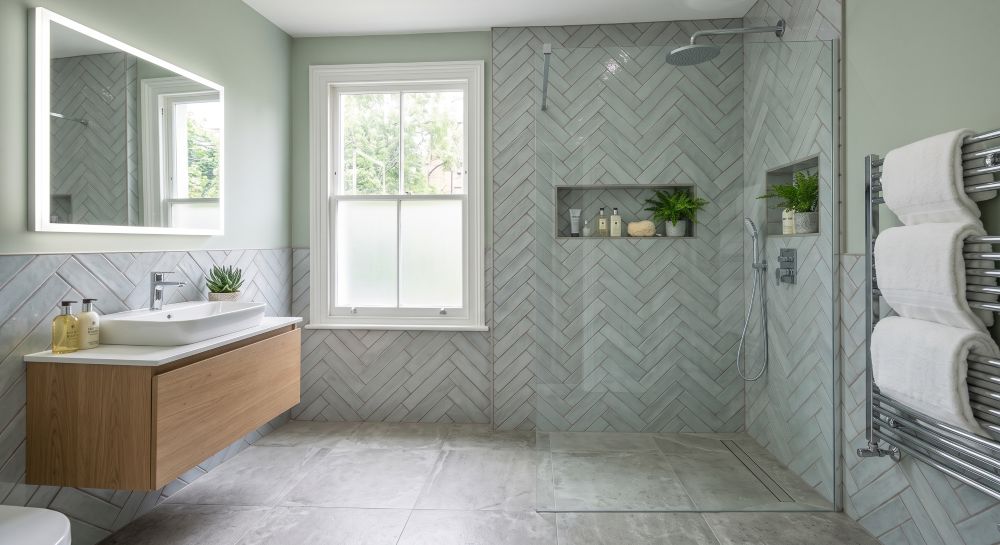
- Herringbone or complex patterns: £45–£60/sqm labour
Material costs range from £15/sqm for basic ceramic up to £100+/sqm for natural stone. A full bathroom tiling job typically runs £600–£2,000 in combined materials and labour - but choosing large-format tiles or a pattern like herringbone can increase labour costs by 25–50% (GetEstimateAI, 2026).
Does a Bathroom Renovation Add Value to Your Home?
The good news is YES, a well-executed renovation typically adds 4–6% to property value (Primethorpe Paving UK Home Improvement Statistics, 2026; BestBuilders, 2026). On the average UK home, that's approximately £11,000–£17,000. Return on investment sits at around 50–70%, making bathrooms one of the stronger options for value-adding renovation work (Primethorpe Paving UK Home Improvement Statistics, 2026).
The caveats matter, though. Over-specifying for the property type is a common mistake: a luxury wet room in a modest terraced house rarely returns its full cost at resale. The stronger ROI tends to come from replacing an obviously dated bathroom - particularly pre-2005 - with clean, well-finished, durable work (BestBuilders, 2026).
With mortgage costs remaining elevated and the "improve, don't move" mentality now firmly embedded in UK homeowner thinking (Daily Business Group, 2026), a bathroom renovation also has an immediate quality-of-life return that's harder to put a number on.
How Long Does a Bathroom Renovation Take?
For a standard family bathroom with no layout changes, expect 7–10 working days on site once materials have arrived (BestBuilders, 2026; GetEstimateAI, 2026). The broad sequencing looks like this:
- Days 1–2: Strip-out and first-fix plumbing
- Days 3–5: Tiling (the longest stage)
- Days 6–8: Second-fix plumbing, electrics, sanitaryware installation
- Days 9–10: Finishing, snagging, silicone sealing
If it’s the only bathroom in the house, discuss sequencing with your fitter before work begins. A good tradesperson will prioritise restoring toilet access early - typically by day 3 or 4 - and plan the project around minimising unnecessary headache.
Add 3–5 days for layout changes, wet room conversions, or any structural work. And order your suite and tiles at least three weeks ahead of the start date: delivery delays are the most common cause of a bathroom project running over time (BestBuilders, 2026).
How Much More Does a Bathroom Renovation Cost in London?
Labour costs vary significantly by region. London and the South East typically command 15–30% more than the national average, driven by labour shortages, higher cost of living, and (for central London) ULEZ operating charges for tradespeople's vans (Buildaway, 2026).
To give a concrete example: a mid-range bathroom renovation that costs around £7,000 in the Midlands or North of England would typically run to £8,500–£9,000 in London (Buildaway, 2026). Material costs are broadly similar across the UK — it's labour that drives the regional gap.
For Hey Alfie bathroom renovation quotes in 2026, London costs are higher, but not dramatically so. The median London job is £7,500, identical to the rest of the UK, but the average is £8,378 versus £7,731 outside London, and London's top quartile runs to £11,500 versus £10,500 elsewhere. That works out to roughly an 8% premium on average, well below the 15–30% often quoted elsewhere. Material costs are broadly flat nationally, so most of the regional gap comes down to labour rates and project scope rather than location alone.
Getting a Quote You Can Actually Trust
The most common budget mistakes in bathroom renovations come from comparing quotes that aren't specifying the same work. A quote that appears significantly cheaper than others may be using lower labour rates (fewer days, less experienced fitter), specifying cheaper materials, or simply leaving out line items that will resurface as variations during the project (MyBuildAlly, 2026).
When reviewing quotes, check for:
- A written, itemised breakdown - labour and materials listed separately
- Named sanitaryware - the specific make and model of the suite, not "allowance for bathroom suite"
- Clarity on what's excluded - particularly waste disposal, any required building inspections, and what happens if concealed problems are found
- Insurance - public liability of at least £2m; Part P registration for electrical work; WaterSafe or CIPHE registration for plumbing
Getting multiple quotes is sensible. But the cheapest quote is rarely the best one - it's usually the one that's left the most out.
How Hey Alfie Handles Bathroom Renovations
When you book a bathroom renovation through Hey Alfie, Alfie - our AI agent - generates a Scope of Works and Initial Estimate (SoWIE) based on your project details before any work begins. That means you get a transparent cost breakdown upfront, not after the first tradespeople have been round.
Every job is handled end-to-end, managed by Alfie from first message to final sign-off. All of our tradespeople are trusted tradespeople - meaning we've checked their reviews, past work, and insurance ourselves. And every booking is backed by the Hey Alfie Guarantee, covering you for up to £1,000 if something isn't right (T&Cs apply).
No surprise quotes. No chasing trades. No wondering whether the person who turned up actually knows what they're doing.
Prices in this guide are UK national averages for 2026, combining materials, labour, and VAT at 20%. Regional variation applies - London and South East prices typically run 15–30% higher. Always obtain at least three written, itemised quotes before committing to a project.
Frequently Asked Questions