Home Improvements That Actually Add Value When Selling (And the Ones That Don't)
Key Takeaways
If your sale is 12 months away, this is the rough priority order based on ROI and practicality:
- Assess your loft - if convertible and the property needs an extra bedroom to compete in your market, explore it now before lead times become a problem.
- Get a local estate agent valuation - understand your property's ceiling before committing to any significant kitchen or bathroom spend.
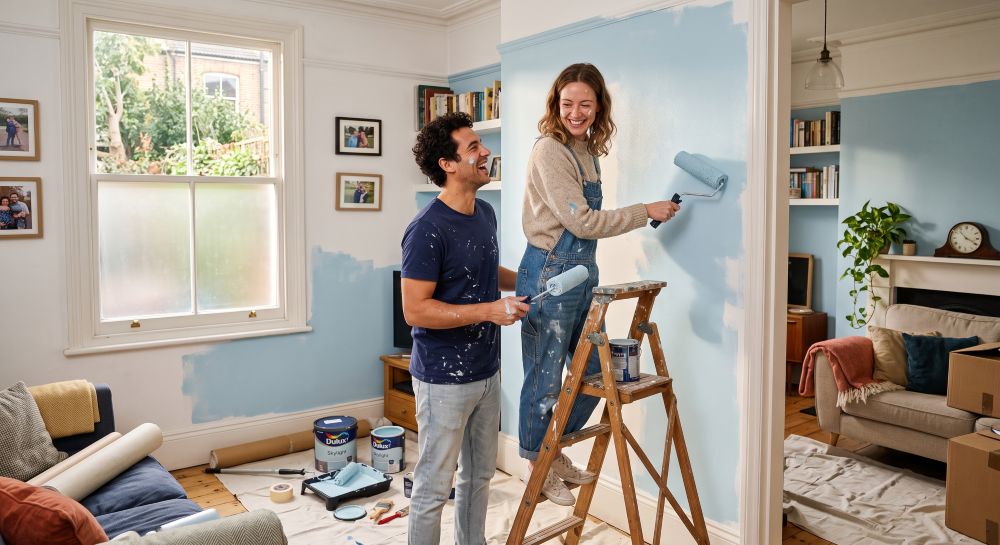
- Freshen up with paint throughout - neutral tones, every room, including woodwork and skirting boards. High return, low cost, no excuses.
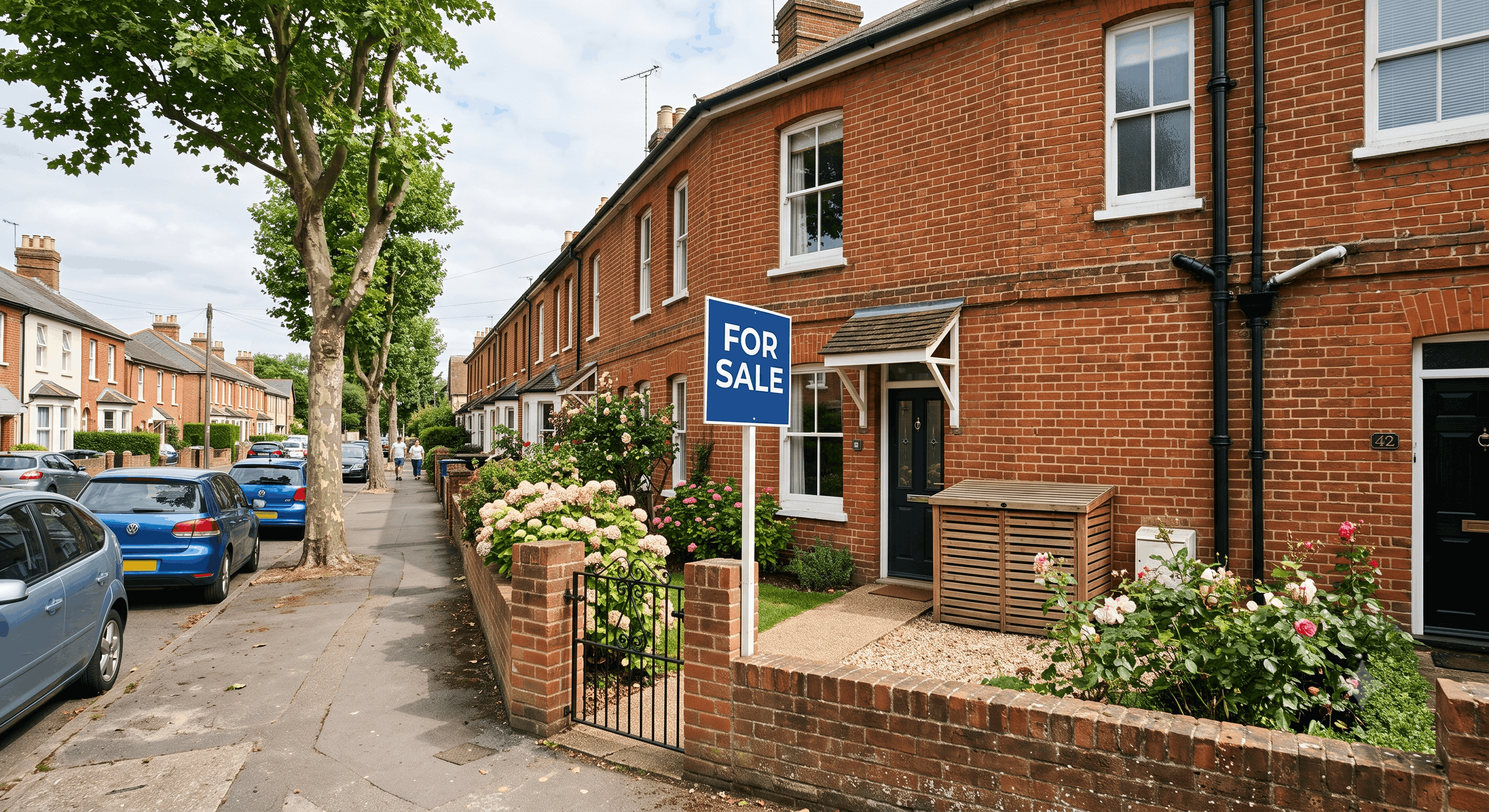
- Sort kerb appeal - front door, front garden, gutters, exterior paint if needed. Budget under £1,500; the return can be multiple times that.
- Tackle the kitchen and bathroom strategically - replace, refresh, or reface based on condition, cost, and how much headroom you have in your local market.
- Declutter and stage - costs almost nothing and affects how every room photographs and feels on a viewing. Buyers buy the feeling first.
Planning to sell in the next 12 months? Put down the hammer for just five minutes. The instinct to renovate everything before the "For Sale" board goes up is absolutely understandable - but not every pound you spend will come back to you when you sell. Some improvements genuinely lift your asking price; others are money down the (soon-to-be-clogged) drain.
A quick note before we dive in: if you're renovating primarily to enjoy your home, different rules apply entirely. A kitchen you love cooking in, a loft conversion that gives the kids their own space, a bathroom that doesn't make you wince every morning - these have real value that no ROI calculation captures. This guide is specifically for homeowners selling in the next 12 months, where the question shifts from "what do I want?" to "what will buyers pay for?"
This guide cuts through the noise with real data, what estate agents actually say, and a clear view of where to focus if you want maximum return.
The Baseline: What Does a Renovation Actually Return?
Before diving into specifics, it helps to anchor expectations. Building & Renovation is the single most requested project category across every job Hey Alfie has managed, more than a quarter of all jobs, which tells you this is exactly where homeowners are already investing, pre-sale.
But, a £2k bathroom update will not magically add £50k of value. On average, home renovations in the UK return around 50p for every £1 spent in direct added property value - though targeted, well-chosen improvements can do significantly better, and some fail to recoup anything at all.
According to analysis by Squared Money drawing on UK property data from 2024–2025, the average renovation adds around 9% to a home's value - roughly £34,000 on a typical UK property at current average asking prices of £376,191, according to Rightmove's June 2026 data.
So why bother if the return is under 100%? Four reasons:
Saleability is worth more than valuation. A renovation that "only" returns 60% also buys you fewer days on market, fewer buyers who walk away after a viewing, and far less negotiating leverage for the person trying to chip your price down.
Property values rise over time. UK house prices have increased in most years over the past two decades. If your home goes up in value while you're renovating it, that growth in value partially offsets your spend before you've even listed.
You live there in the meantime. ROI calculations treat homes like financial instruments. They're not. Two years of enjoying a kitchen you actually love has real value that doesn't appear in any spreadsheet.
The cost of not renovating is invisible - until it isn't. A buyer who spots a tired bathroom or a scruffy front door doesn't just note it. They use it. "Works needed" becomes a negotiating position, and before you know it you've lost £5,000–£10,000 at the offer stage that a £1,500 fix could have prevented. The right question isn't "will this add value?" - it's "what does it cost me to leave this as it is?"
With that framing in mind, here are the improvements worth making - ranked by their realistic impact on price, saleability, and how buyers feel when they walk through the door.
The Big Six: What Adds Value (and by How Much)
1. Loft Conversion: The Highest-ROI Major Project
If you have a convertible loft and you're not using it, this is consistently cited as the best return on a significant structural investment - and the numbers make a compelling case.
Nationwide's analysis found that a loft conversion adding a double bedroom and bathroom can increase a property's value by up to 24–25% - up from the 22% they recorded in 2016, driven in part by post-pandemic demand for space (turns out, everyone started to really appreciate elbow room once they were stuck indoors). On a £376,000 home, that's a potential uplift of £90,000–£94,000. In cash terms across different property types and regions, uplifts typically range from £50,000 to £120,000.
Costs in 2025–26 typically run from £50,000 to £150,000 for London and the South East, somewhat lower elsewhere. A well-designed, well-executed conversion can return close to - or in some cases exceed - 100% of its cost in added value. The key word there is well-designed: a cramped conversion with poor headroom or a staircase that eats into bedroom three does considerably less.
What estate agents say: Bedroom count is one of the most influential factors in valuation. Going from two to three bedrooms, or three to four, doesn't just add square footage - it repositions your property in the market, opening it to a significantly larger pool of buyers. An en-suite makes it more compelling still.
Caution: With lead times and labour costs up around 8% over the past two years, a rushed conversion before a sale isn't always viable. If you're 12 months out, speak to a trusted tradesperson now to assess feasibility.
2. Single-Storey Extension: Space That Sells
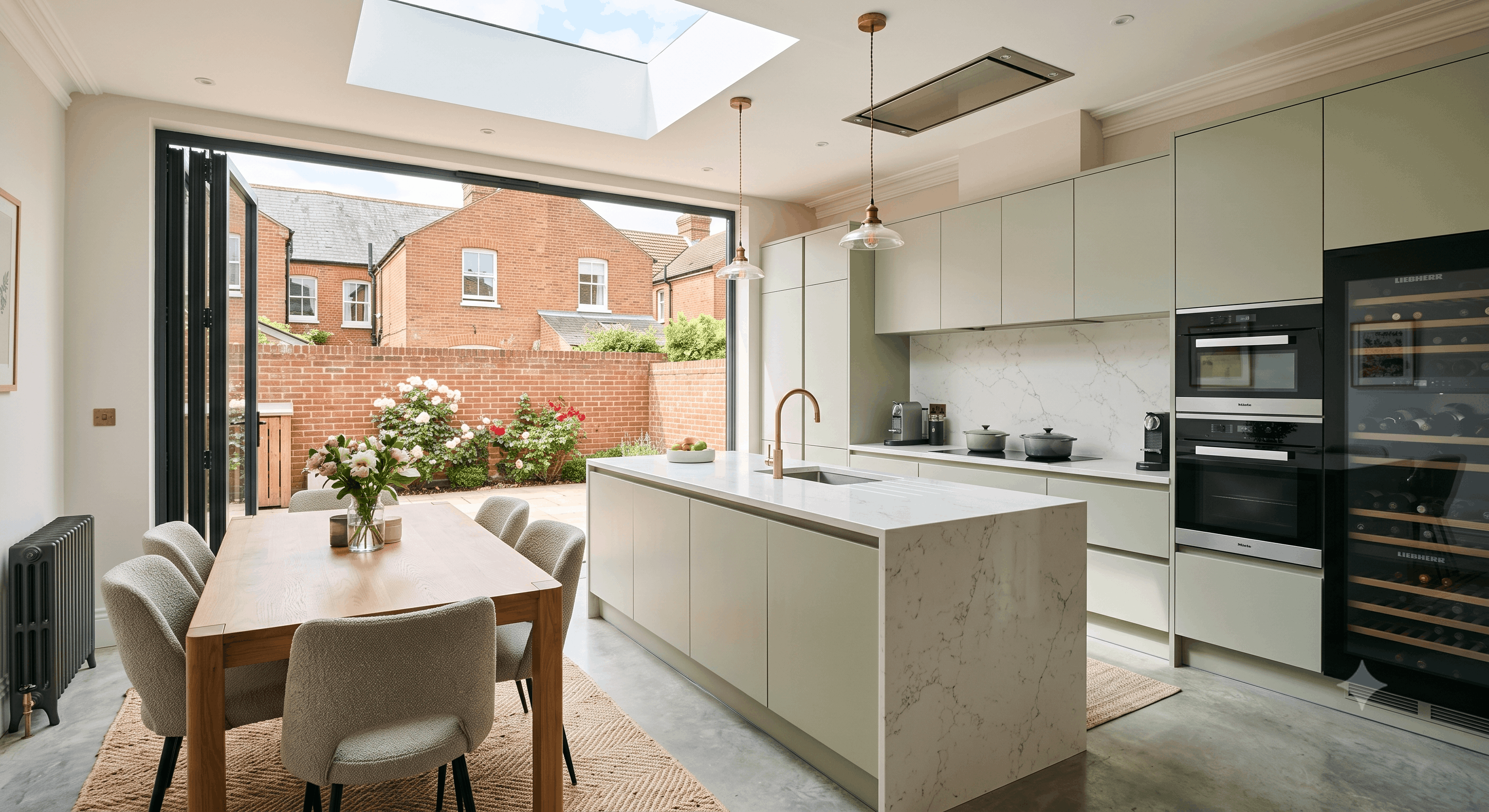
A well-planned rear extension - opening up a kitchen-diner, adding a utility room, or creating the open-plan ground floor that buyers are increasingly looking for - can offer some of the strongest returns of any home improvement.
Nationwide confirms that adding an extra bedroom via extension raises a home's value by around 15% on average. On a £376,000 property, that's approximately £56,000 in added value. A kitchen extension of around 12m² for a three-bedroom house costs in the region of £20,000–£30,000 in 2025–26 (based on Hillarys citing Checkatrade data, updated for current cost inflation). At the lower end of that cost range, you're looking at an ROI of close to 3:1 - one of the most compelling figures in residential property improvement.
Space-adding projects have only become more valuable since the pandemic, as buyers increasingly prioritise usable square footage and open-plan living. That trend hasn't reversed.
The overcapitalisation risk: As Squared Money's index notes, the improvement has to match the value ceiling of your area. If your home is currently valued at £500,000–£750,000 in an area where larger comparable properties sell for £800,000–£1,000,000, there's genuine headroom for an extension to pay off handsomely. If you're in a street where no property sells above £250,000, a £40,000 extension is unlikely to come back to you. Always get an estate agent's view on local comparables before committing.
3. Kitchen Renovation: Powerful, But Not a Guarantee
Kitchens are unsurprisingly the room buyers scrutinise most closely - a tired kitchen can meaningfully suppress interest or give buyers a negotiating wedge they'll use. But the data here rewards a nuanced approach.
Analysis from Squared Money puts kitchen ROI at around 50% - meaning a £15,000–£20,000 kitchen refit typically adds £7,500–£10,000 in direct value. That's real money, but the bigger benefit is saleability: a well-presented kitchen reduces the likelihood of a price reduction at survey stage and increases the number of buyers who make an offer in the first place. Kitchen renovation was the most commonly planned home improvement for UK homeowners in 2025, according to Hafele's Homes for Living Report - so buyers increasingly expect a decent kitchen as standard.
What estate agents say: A bespoke, highly personalised kitchen can actually work against you. Hamptons' guidance is consistent: over-personalised kitchens with unusual layouts or styles limit buyer appeal. Neutral, well-built, and functional outperforms bold and individual every time when you're selling.
The smarter move if time is short: You don't always need a new kitchen - you need it to not be a red flag. Respraying units, replacing worktops and handles, and updating taps can transform the feel at a fraction of full-replacement cost. And it's worth knowing that design-led budget combinations - IKEA foundations with quality fronts and a good worktop, for example - can achieve a genuinely premium look for well under £10,000. Buyers respond to how a kitchen feels, not the price tag on the units.
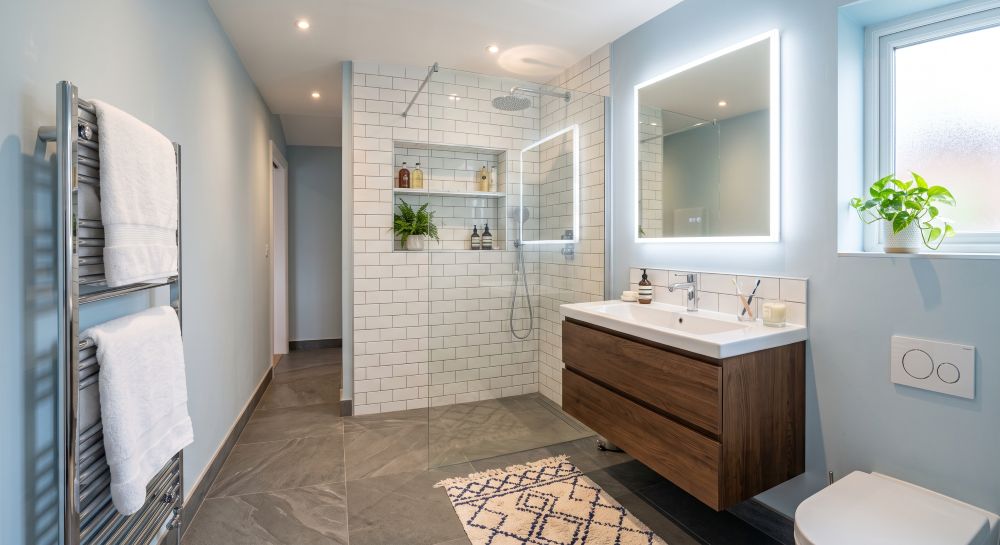
4. Bathroom Renovation: Modest Return, Important for Confidence
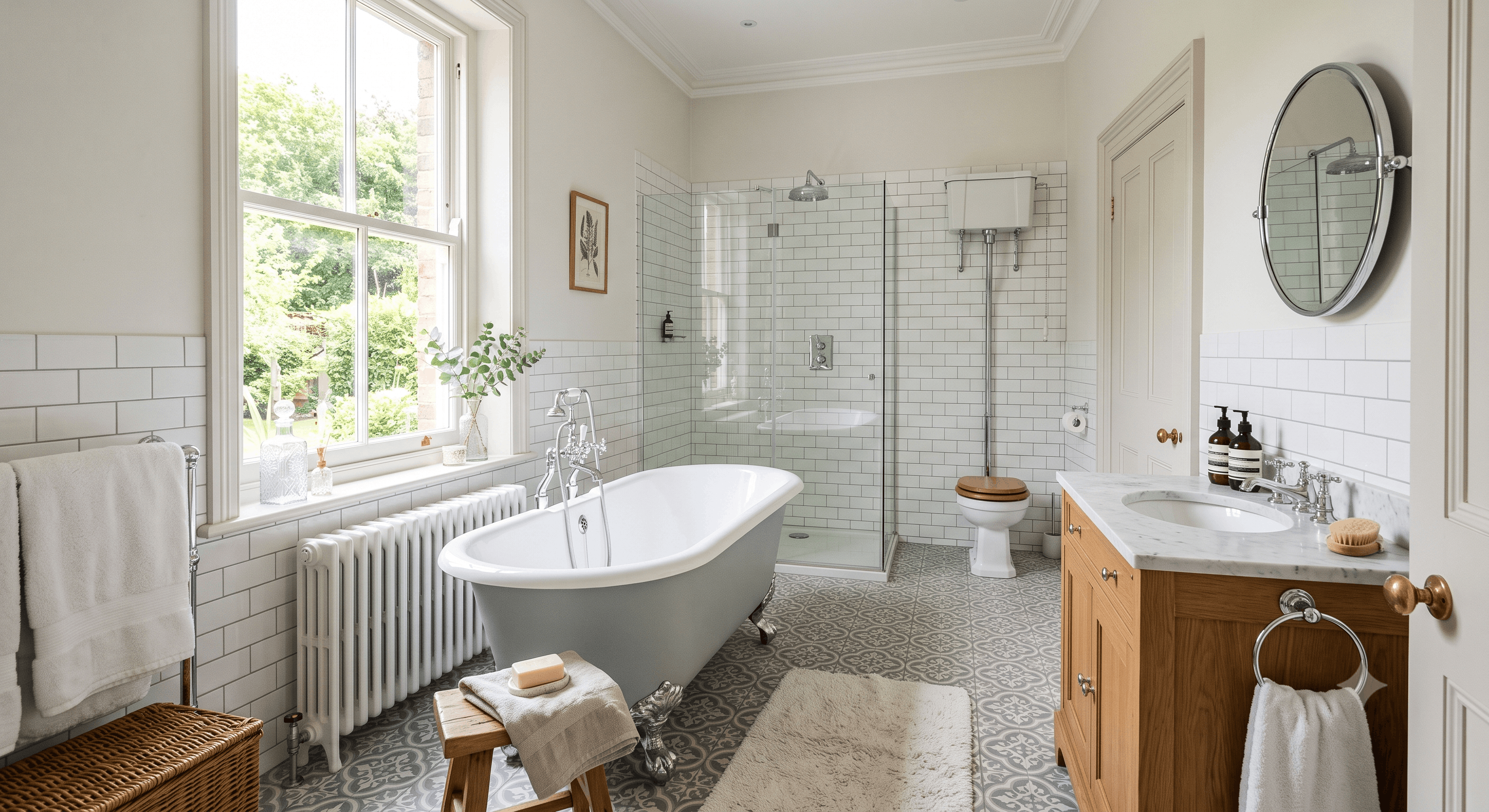
A dated bathroom doesn't actively prevent a sale, but it does give buyers ammunition to negotiate down - ideally avoided. Like kitchens, bathrooms tend to return around 50% of the cost invested in direct value terms.
Adding a second bathroom, however, is a different calculation: Nationwide data shows it can increase value by 5–6%. On a £376,000 home, that's £18,000–£22,000 in added value - a meaningful uplift if your home currently has only one bathroom and your buyer pool expects more. The caveat: installation costs for a new bathroom can run £8,000–£20,000+, so the ROI depends heavily on what you spend and what your property can absorb.
Jones Robinson estate agents note that a full replacement suite is often unnecessary: buyers who are already interested in your home won't pull out because of a functional bathroom. A deep clean, fresh grouting, resealing, and a coat of paint can achieve a similar visual result at a fraction of the cost. Simple is often best.
5. Painting and Decorating: The Highest ROI Per Pound Spent
This is the one improvement almost every estate agent will urge you to do before listing - and the data backs them up emphatically.
Research cited in the Squared Money Home Improvement Index found that basic redecoration delivers around 62% ROI. But here's why that figure undersells it: the ROI on decorating isn't the point - the absolute cost is. The Federation of Master Builders estimates repainting the front of a house costs around £550–£1,500 including labour. Even at the top of that range, you're spending a tiny amount relative to the impression it creates. A fresh coat of paint doesn't just add value - it removes the anxiety that makes buyers start mentally discounting before they've even reached the kitchen.
Although we fully support adding personality to your home while you're living there - hello, bold feature wall - Propertymark's guidance is clear that neutral colours are most appealing to buyers and give them the mental permission to imagine their own things in the space.
The rule: Warm white, soft grey, sage green. Every room, including woodwork and skirting boards. As Ideal Home reports, design professionals are unanimous: bold or unconventional colour schemes make buyers see the property as extra work rather than an inviting home. And buyers who see extra work start asking for money off.
6. Kerb Appeal: Don't Underestimate the First Three Seconds
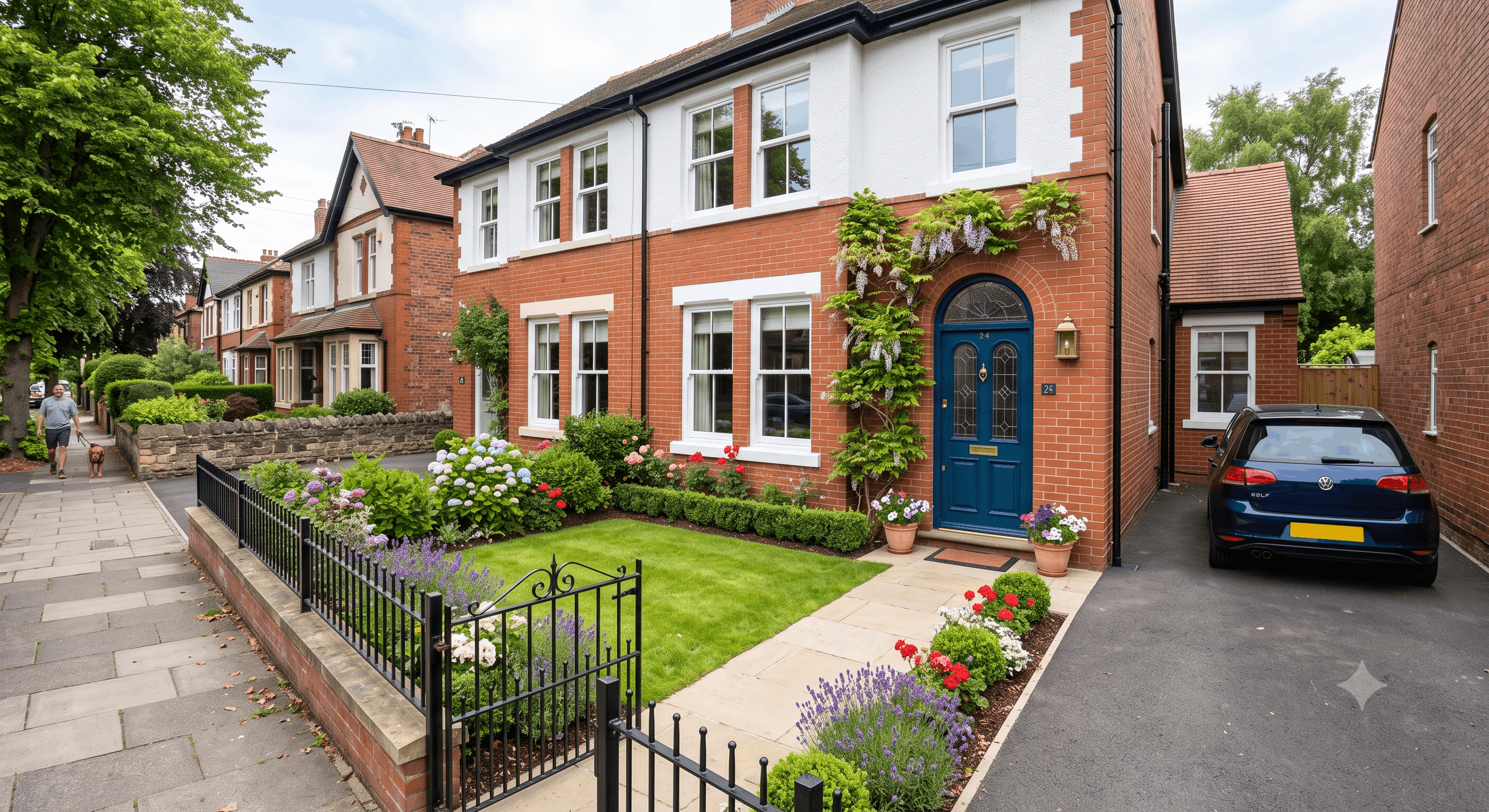
Buyers form an impression before they walk through the door - and increasingly, before they even book a viewing. Most property searches start online, where the exterior photo is the first thing they see.
Research cited by Evolution Money found that 93% of people pass judgement on a property based purely on how it looks from the outside, and 30% said they'd pay an extra £5,000 or more for a home with a well-maintained exterior. The HomeOwners Alliance study identified the top three kerb appeal features buyers care most about: windows in good condition (rated important by 71% of homeowners), a roof that appears sound, and a well-maintained front garden with no weeds and trimmed hedges (67%).
The good news: improving kerb appeal is among the most affordable things you can do. Indicative costs:
- Tidy an overgrown front garden: ~£200–£400 for a day's work
- Repaint the front of the house: ~£550–£1,500 (scaffolding may apply)
- Redecorate the front door: ~£200–£500
- Clear and repair gutters: ~£200–£300
Analysis by Squared Money puts the ROI on kerb appeal upgrades - fresh exterior paint, landscaping, modernised windows and doors - at 70–80% or more. Spend £1,500, potentially add thousands. These are among the highest-returning actions any seller can take - and unlike a loft conversion, you can do them in a weekend.
What Doesn't Add Value (Despite What You Might Think)
Understanding where not to spend is just as important as knowing where to invest.
Swimming pools. Estate agents and property advisors are consistent: pools are high cost, high maintenance, and attract minimal buyer interest in the UK climate (although these recent heatwaves may be slowly changing our minds). In most markets, they actively deter buyers who don't want the upkeep bill.
Highly personalised designs. A bespoke mural, a feature wall in a bold print, or a kitchen in a statement colour may feel like an investment in your home - and if you love it, that's completely valid. But for selling purposes, buyers see it as work they'll have to undo. Hamptons estate agents are direct on this: highly personalised designs read as extra work rather than an inviting space.
Luxury wallpaper throughout. JM Construction notes that excessive wallpaper is off-putting at sale - stripping it is a tedious job buyers won't want if they're looking for a move-in-ready home. A single feature wall is fine; papering every room to your (undoubtedly immaculate) taste is a different matter.
Home theatres, wine cellars, and niche spaces. These narrow your buyer pool significantly and rarely return anything close to their installation cost. GetAgent's advice: keep room layouts simple and broadly functional - buyers want to imagine themselves living there, not imagine converting a cinema back into a bedroom. (We do encourage you to enjoy the wine cellar to its fullest before the sale, however.)
Garage conversion without alternative parking. Context-dependent, but in areas where off-street parking is valued, removing a garage to add a room can actively reduce saleability. Jones Robinson flag this clearly: for buyers with multiple vehicles, the loss of secure off-street parking can be a dealbreaker.
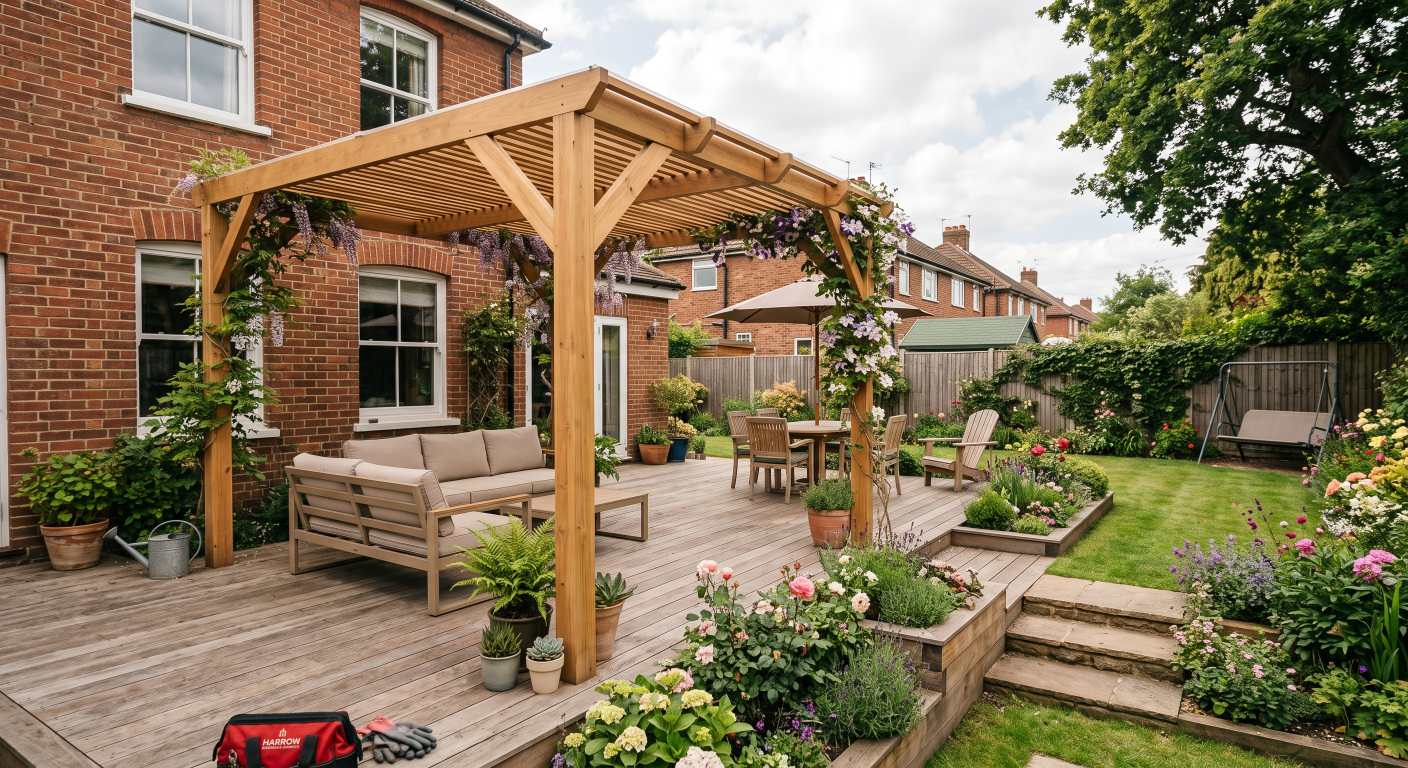
Over-landscaped gardens. Going from overgrown to tidy adds real value. But elaborate water features, topiary, and extensive planting are often seen by buyers as a maintenance burden rather than a perk. Squared Money's research shows garden makeover ROI dropped from ~88% in 2014 to around 14% by 2017 as luxury garden spend became more common - the marginal value of extra garden complexity is low.
Scope a Renovation with Hey Alfie
Not sure where to start, or what your specific property needs before it goes to market? Hey Alfie connects you with trusted tradespeople across painting and decorating, renovation, kitchen and bathroom refits, and more - with an AI-generated Scope of Works and Initial Estimate (SoWIE) so you know exactly what you're looking at before work begins.
Frequently Asked Questions