Decking, patios and pergolas: 5 things to know before you book
Key Takeaways
- UK homeowners are set to spend an average of £865 on outdoor projects in 2026, up from £798 in 2025.
- The single most common regret after a project finishes is that the space is too small. Measure your furniture first, then add at least 1 metre in every direction.
- A typical UK patio costs £2,500 to £8,000 installed. Composite decking runs £100 to £200 per sqm but needs zero ongoing maintenance, unlike timber.
- Book a tradesperson 6 to 8 weeks ahead of your start date. If you want a project finished by July, lock in your booking in May.
- Any patio built against the house needs a drainage fall of at least 1:60 away from the property, and most decking under 30cm high counts as permitted development.
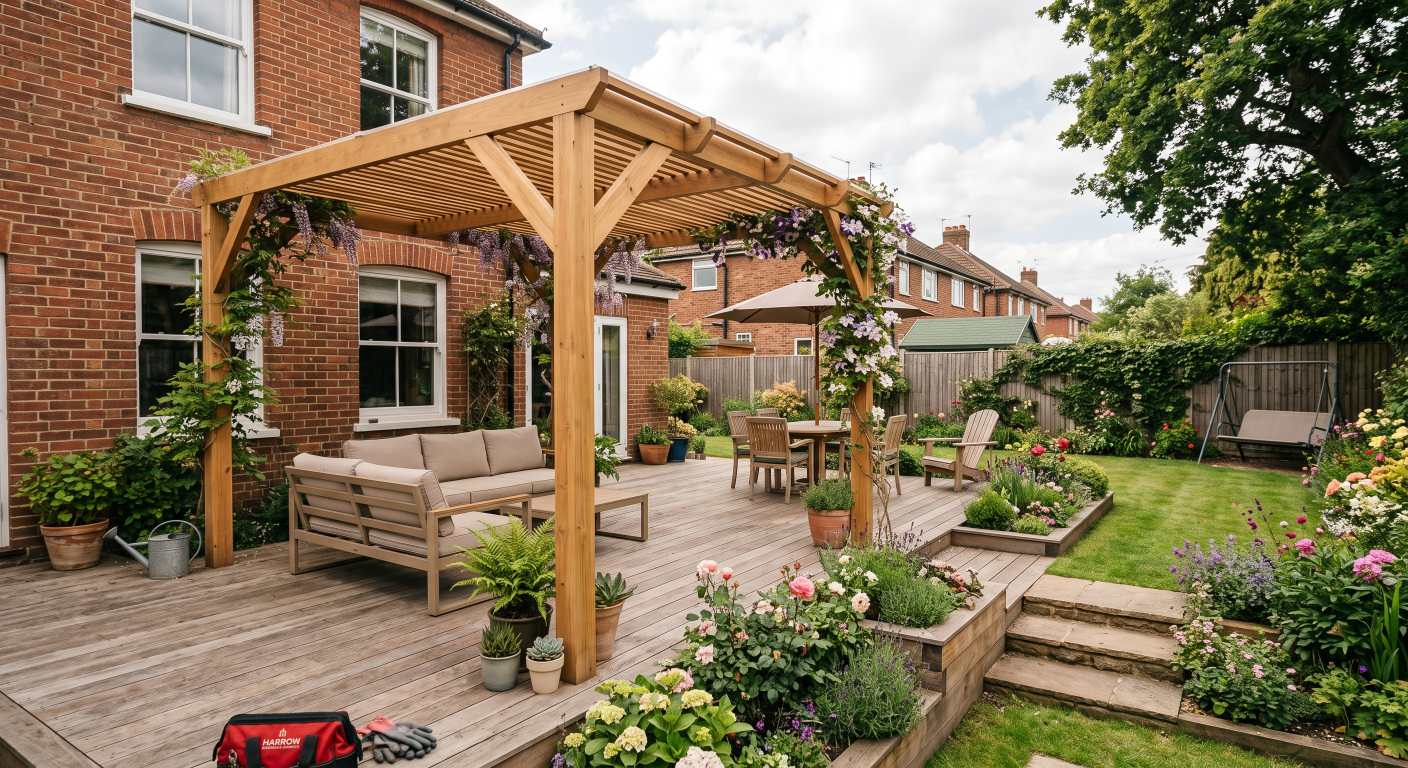
Gardens are being treated like rooms now.
Outdoor dining, built-in seating, proper lighting. UK homeowners are expected to spend an average of £865 on outdoor projects in 2026.
Before you book a decking, patio or pergola installation, here's what to get right:
- Homeowners wish they'd gone bigger
- Think about how you'll use it
- Book early to get great tradespeople
- Pick the right materials
- Don't forget drainage
- Bonus tips: Planning permission required & costs to install
- Frequently asked questions
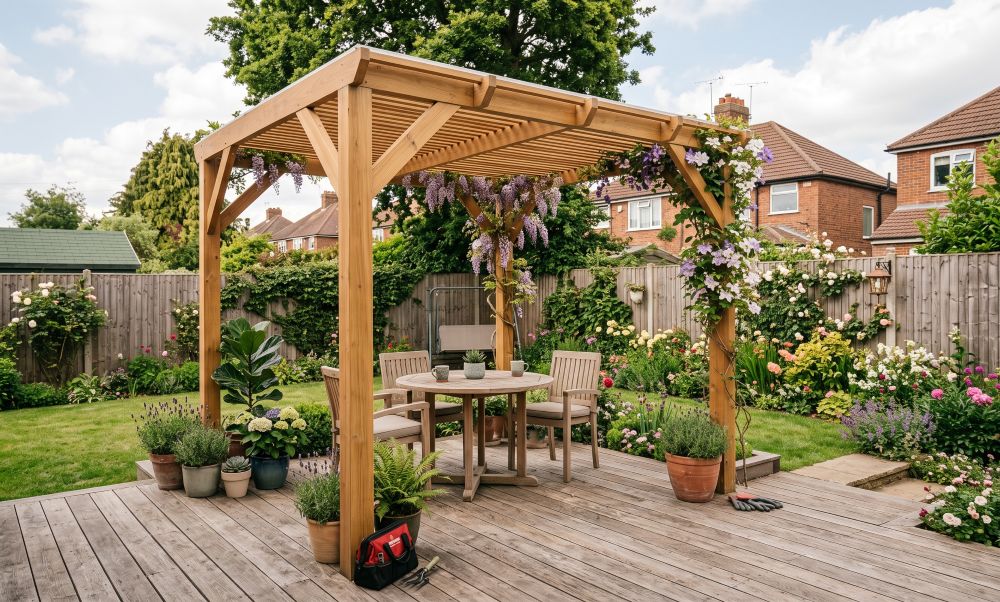
1. UK Homeowners: "we wish we'd gone bigger" is the most common regret
This is the most consistent feedback from homeowners once a project is done: they wish they'd gone bigger.
A 3m x 4m patio looks generous on paper. Add a 6-seater table and four chairs and you've got roughly 60cm clearance each side.
Not enough to pull a chair out, let alone walk past. Rule of thumb: measure your furniture first, then add at least 1 metre in every direction.
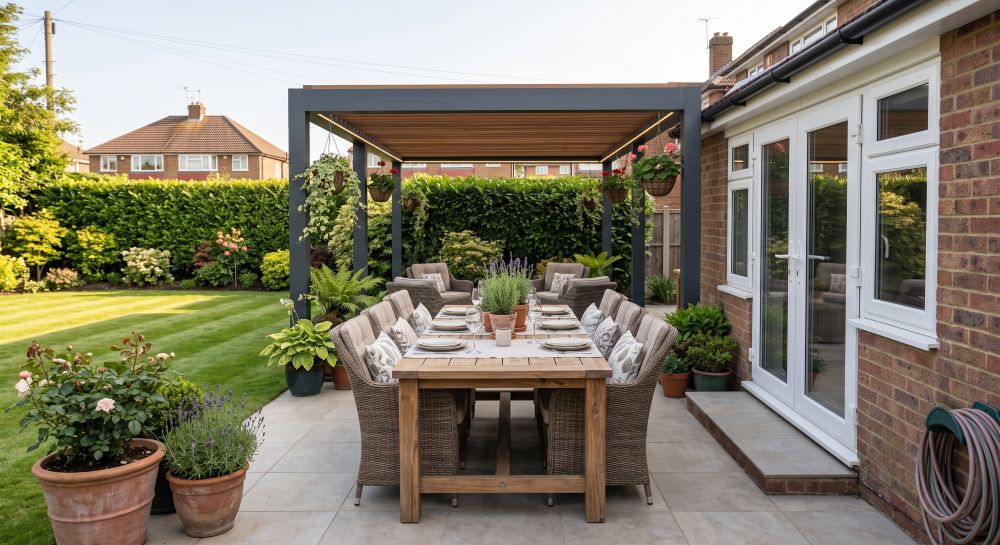
2. Design for how you'll actually use it. Not just generic "outdoor space"
What your outdoor space should look like depends entirely on how you're going to use it.
Outdoor dining for 6+: Hard surface, clear sightlines to the back door, and shade designed in. Decide on pergola, sail, or parasol anchor point, beforehand.
Lounging: Track where the sun sits between 2pm and 6pm before you position any structure. Most people build facing the wrong direction.
Kids and dogs: Avoid pale porcelain, recessed drainage channels, and sharp corners on raised decking. Some surface finishes are rough on bare feet.
Ask your tradesperson to design around a brief, not just a footprint.
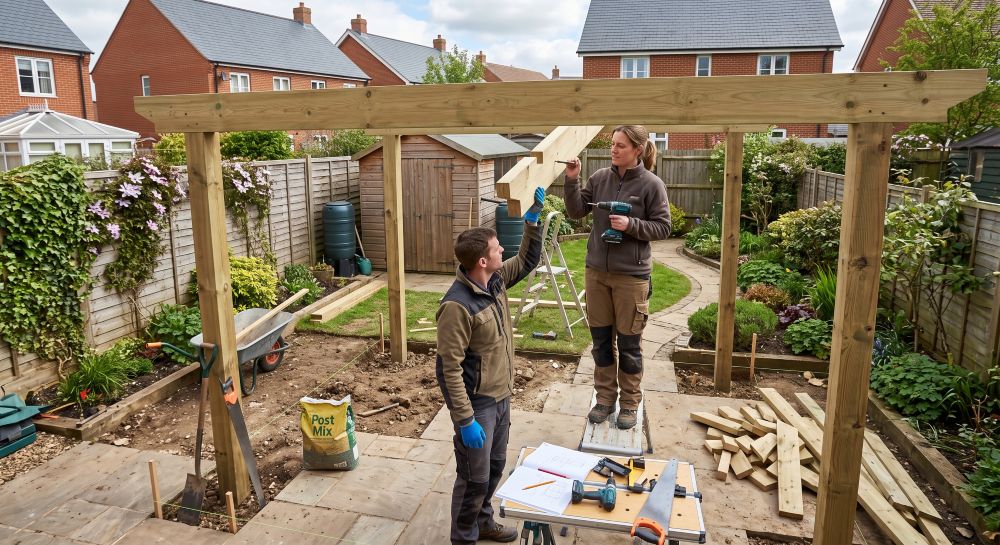
3. Book early to get great tradespeople
Outdoor living projects are seasonal, which means so is tradesperson availability.
Here's the typical time required for outdoor projects:
Good tradespeople book out 6–8 weeks in advance from April onwards. If you want a project completed by July, May is when you need to lock in a booking.
And if your outdoor project is part of a wider spring push, the our spring home checklist covers everything else worth doing before summer.
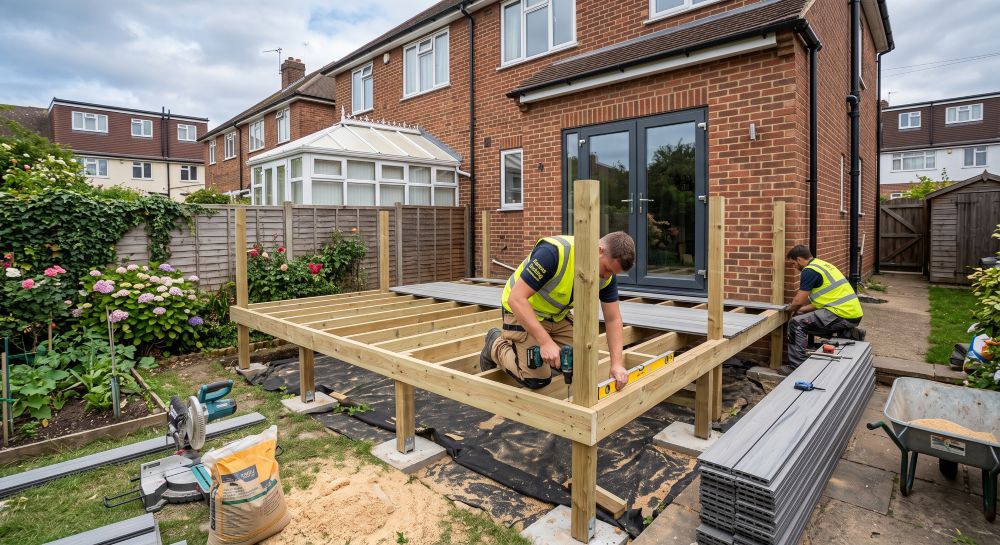
4. Choose materials wisely: What actually lasts in the UK.
UK winters are tough on outdoor materials.
Wet, freeze-thaw, and shaded gardens mean what looks good in a showroom doesn't always hold up in a real British garden.
For Decking and pergolas
- Composite (£100–£200/sqm installed) costs more upfront but lasts 20+ years with zero maintenance.
- Hardwood looks great but needs oiling once or twice a year.
- Softwood is cheapest but requires the most upkeep.
For Patios
- Porcelain is frost-proof, stain-resistant, and handles UK winters well.
- Natural stone has more character but needs annual sealing. Make sure to specify sawn or brushed finish only.
- Polished stone is a slip hazard when wet.
Material choice matters more in the UK than almost anywhere else.
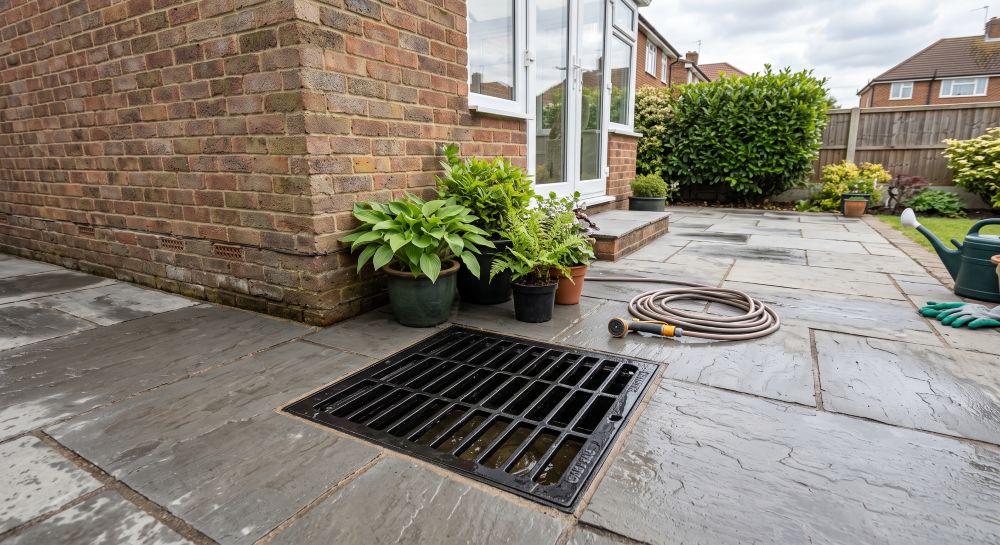
5. Don't forget drainage: Where does the water go? The question most people forget to ask.
Poor drainage is how a patio starts to pool, stain, and lift within a couple of years.
For any patio abutting the house, regulations require a fall of at least 1:60 away from the property.
Pooling water damage varies by material: standing water stains and slips on natural stone, lifts loosely-laid porcelain, and accelerates rot on timber.
Before signing off, ask: what's the drainage plan, and where does excess water go in heavy rain?
Bonus Tip 1. How much does decking, a patio, or a pergola cost in the UK?
Cost is the question most people want answered first. Here are realistic UK figures for 2026, based on typical residential projects:
What drives the price up: size, material spec, the amount of groundwork needed (particularly if the ground is uneven or drainage is poor), and access.
A garden that requires materials to be carried through a narrow side gate takes longer and costs more. Prices also vary by region. Expect to pay more in London and the South East.
These are UK averages. The only way to get an accurate number for your specific garden is a quote from a trusted tradesperson.
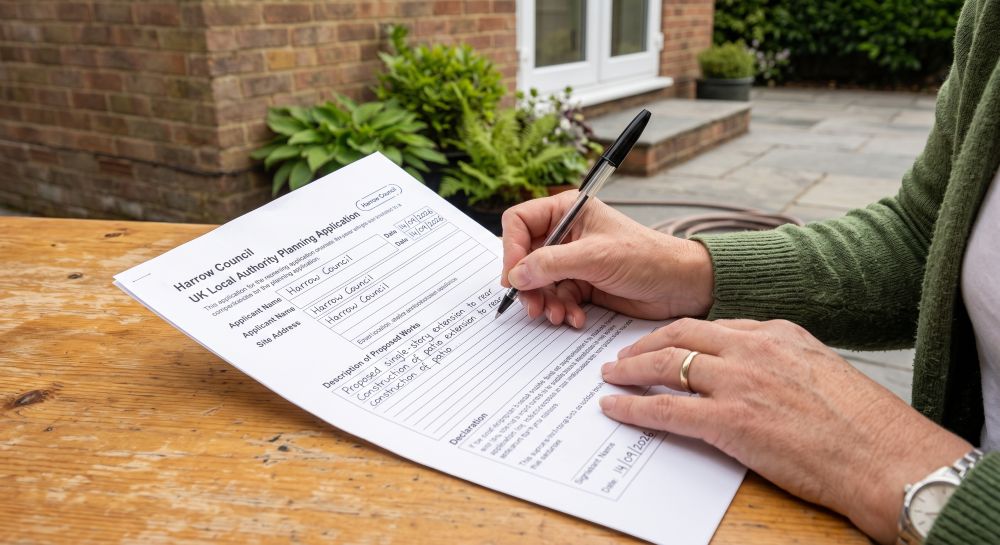
Bonus Tip 2. Do you need planning permission for decking or a patio in the UK?
Most outdoor living projects don't require planning permission, but there are rules worth knowing before you start.
For decking:
- Permitted development if no more than 30cm above ground level.
- Together with any other extensions or outbuildings, must not cover more than 50% of your total garden area.
- Cannot be positioned forward of the principal elevation of the house (i.e. not in the front garden facing a road).
- Listed buildings: no decking permitted within the curtilage without specific consent.
- Conservation areas, National Parks, and Areas of Outstanding Natural Beauty have stricter rules. Always check with your local planning authority before starting work.
For patios:
- Ground-level patios generally don't require planning permission.
- If your property is in a conservation area or is listed, check with your local authority before committing to a design.
For pergolas:
- A freestanding pergola is usually permitted development.
- If it's attached to the house and significant in size, it may be treated as an extension and require permission.
Your tradesperson should flag any potential planning issues, but don't rely on this alone. Check with your local planning authority before you commit to a design, especially if your property has any designations.
Frequently asked questions