Autumn Maintenance Checklist: 15 Things To Do Before Winter Starts
Key Takeaways
- Most autumn checks and maintenance work are fast to complete, but skipping them can lead to repairs costing thousands.
- Boiler services book up fast in October and November so you should start looking now.
- A blocked gutter left over winter is one of the cheapest problems to prevent and one of the most expensive to ignore.
Fewer daylight hours. Colder mornings. The first proper frost on the car windscreen.
Autumn is the last real window UK homeowners get to catch small problems before winter turns them into expensive ones. We've pulled together 15 autumn home maintenance jobs below, with real cost estimates from Alfie, time guides and advice on when to call a tradesperson instead of doing it yourself.
Here's what we'll cover
- Heating and interior checks
- Roof and exterior checks
- Garden and outdoor prep
- Safety and security checks
Why autumn maintenance matters
Summer is forgiving. A dripping tap, a loose fence panel or a slightly draughty window doesn't cost you much when it's 18°C outside. Winter is not forgiving. The same small fault, left unchecked, becomes a burst pipe, a collapsed fence in a storm, or a heating bill that's 15% higher than it needs to be.
According to the Association of British Insurers (ABI), weather-related damage and escape of water are consistently among the most costly categories of UK home insurance claims, and most of it is preventable with basic seasonal upkeep.
Regular autumn maintenance helps you:
- Avoid emergency call-outs on the coldest nights of the year, when tradespeople are hardest to book and most expensive to hire
- Cut your heating bill before the price cap and the cold both bite
- Catch small roof, gutter and pipe issues before winter weather turns them into structural ones
- Keep your home safe: working smoke alarms, carbon monoxide detection and secure locks matter more when evenings are dark
- Protect your insurance position, since most UK policies include a maintenance clause
Heating and interior checks
1. Service your boiler
Time: 15 minutes to book, 1 hour for the visit | Cost: £80–£150, national average around £100
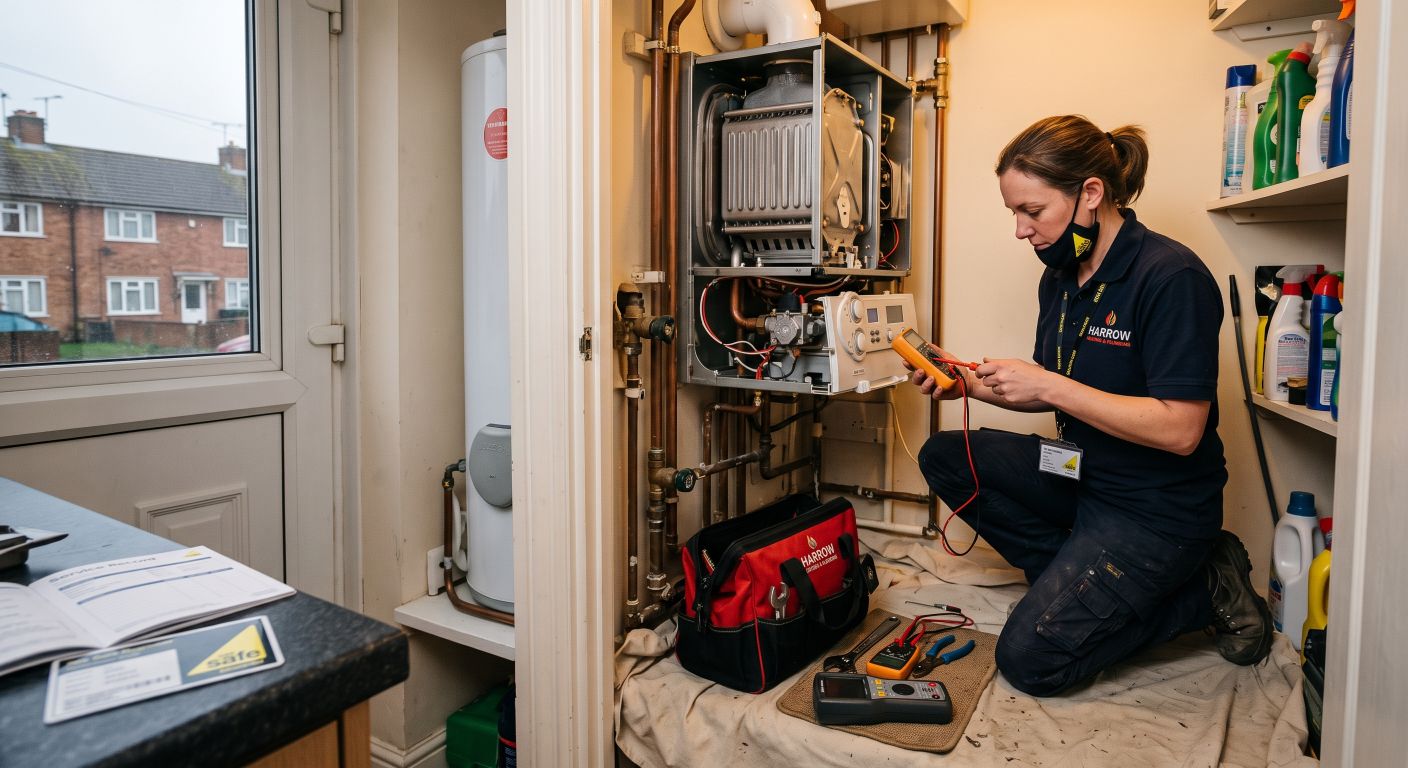
A boiler service is the single most important thing on this list. The average UK boiler service costs around £100, with most homeowners paying between £80 and £150 depending on boiler type and location.
The best time to book is late summer or early autumn, before demand peaks. Wait until the first cold snap and you'll be competing with everyone else who left it too late, often paying more for a slower, more stressed engineer.
Only a Gas Safe registered engineer can legally service a gas boiler. This isn't optional. It's a legal requirement under the Gas Safety (Installation and Use) Regulations 1998, and it's what keeps your manufacturer's warranty valid.
2. Bleed your radiators and check pressure
Time: 20–30 minutes | Cost: Free (DIY) | Professional check: £80-£100 for an hour with a handyman
Cold spots at the top of a radiator, while the bottom stays warm, mean trapped air. Bleeding your radiators before you rely on them daily keeps your heating system efficient and stops you overpaying to heat rooms that never get properly warm.
While you're at it, check your boiler pressure gauge. Most systems should sit between 1 and 1.5 bar when cold. If it's regularly dropping, that's a sign of a small leak somewhere in the system worth investigating now rather than mid-January.
3. Sweep your chimney or flue
Time: 30–45 minutes | Cost: £100–£120 for a professional
If you have a working fireplace, wood burner or multi-fuel stove, autumn is the right time to book a sweep. According to HETAS, the UK's official body for solid fuel heating standards, sweeps are busiest between September and November as everyone prepares for winter, so booking early avoids the queue.
HETAS recommends sweeping wood or coal-burning chimneys at least twice a year and smokeless-fuel chimneys at least once. Skipping it is a real fire risk: unswept flues remain one of the leading causes of chimney fires in the UK.
Always use a HETAS, NACS or Guild of Master Sweeps-approved sweep, and keep the certificate. Most insurers ask for proof of regular sweeping before paying out on a chimney-related claim.
4. Top up your loft insulation
Time: 2–4 hours (professional install) | Cost: £250–£750 depending on starting depth
A quarter of a typical home's heat escapes through an uninsulated roof. According to the Energy Saving Trust, taking a loft from no insulation to the recommended 270mm can save a typical home somewhere between £210 and £390 a year on heating bills, and a professional install for a fully uninsulated semi-detached loft costs around £750, or roughly £600 if you're only topping up from 120mm.
Check your existing depth first. If it's below 100mm, and a lot of UK homes installed in the 1980s and 90s still are, topping it up before the heating season is one of the best-value jobs on this whole list.
5. Draught-proof windows and doors
Time: 30 minutes to a full afternoon | Cost: £50–£300 DIY, £200–£400 professional
According to the Energy Saving Trust, professional draught-proofing of windows and doors can save a typical UK home around £85 a year, with blocking an unused chimney saving a further amount on top. Professional installation costs around £250 for a whole house, but simple DIY strips and excluders cost a fraction of that.
Focus on the gap under external doors first, it's usually the single biggest heat leak in the house, then move to window frames, letterboxes and any gaps around pipework. Never block a chimney connected to a gas fire or boiler flue, and don't seal over trickle vents or air bricks. They're there to stop damp, not to waste heat.
Roof and exterior checks
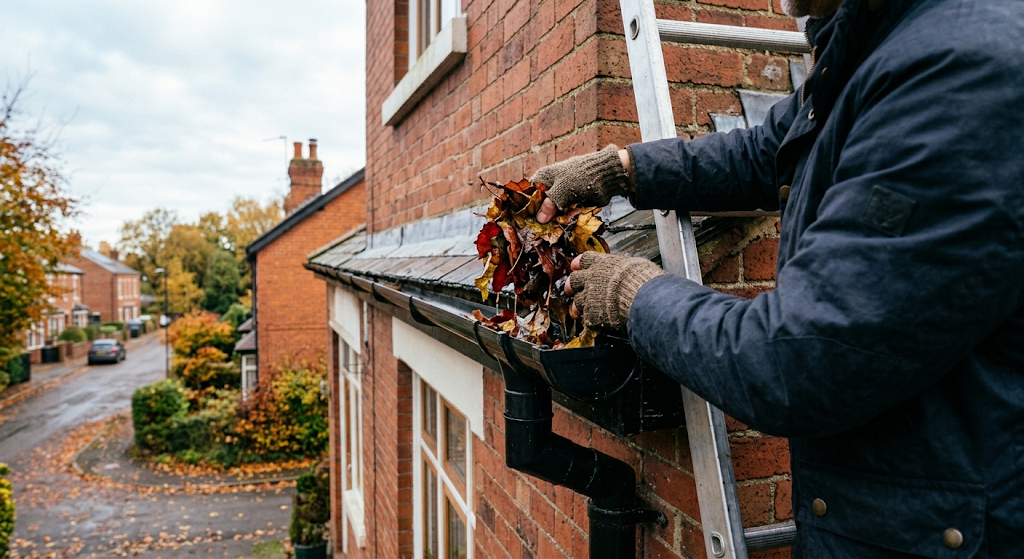
6. Clear your gutters and downpipes
Time: 1–2 hours | Cost: £50–£165 + VAT depending on property size
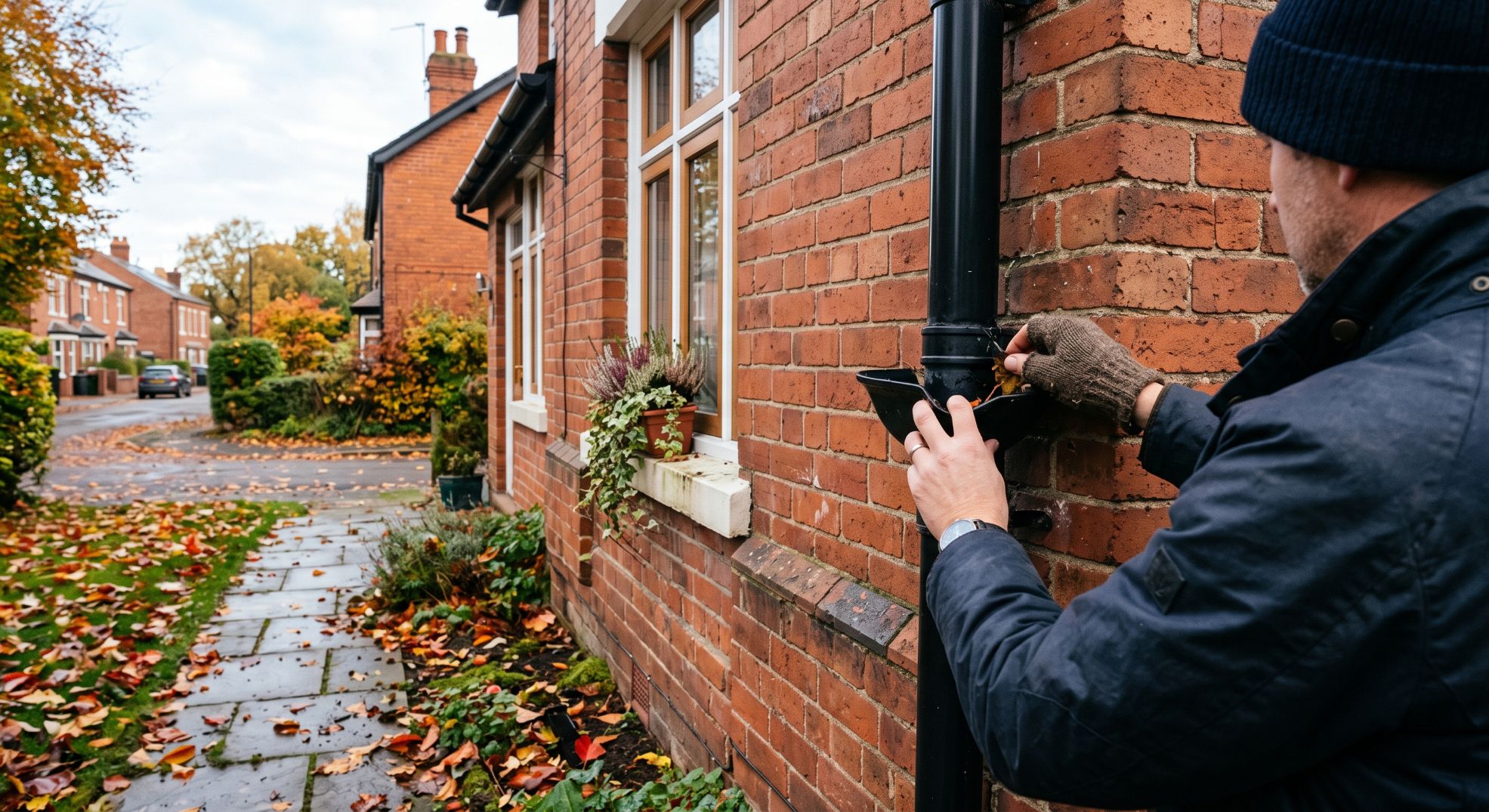
Autumn is the single most important time of year to do this. Falling leaves clog gutters faster than at any other point in the calendar, and a blocked gutter overflowing onto brickwork all winter causes exactly the kind of penetrating damp that costs far more to fix than the clean would have.
A standard terraced house gutter clean costs around £80–£120 + VAT, rising to £130–£165+ for larger properties with guttering on all sides. Most trade guides recommend a full clean in late autumn after leaf fall, plus a second check in spring.
While you're up there (or your tradesperson is), check gutter joints for leaks and look at the fascia boards behind for early signs of rot.
7. Check your roof, flashing and chimney stack
Time: 15–20 minutes from ground level | Cost: Free to inspect | Professional inspection: £150–£300
Do this from the ground with binoculars. Look for slipped, cracked or missing tiles, damaged flashing around chimneys or skylights, and anything that looks out of place compared to the rest of the roof.
A gap that seems trivial in September can let in enough water over a wet, freezing winter to damage roof timbers, an issue that turns a £200 repair into a £2,000+ one. Don't climb up yourself to check. If anything looks wrong, get a professional to assess it properly before the weather turns.
8. Inspect brickwork, render and pointing
Time: 30–45 minutes | Cost: Free to inspect | Repointing: £20–£35 per m²
Walk slowly around the outside of your home. Look for cracked or crumbling mortar, hollow-sounding render, staining, or damp patches, particularly around window and door frames where sealant can shrink and crack over the year.
Small hairline cracks in mortar joints are usually fine to monitor. Anything wider than 5mm, or cracks running diagonally, should be looked at by a professional before winter's freeze-thaw cycle makes them worse. Water that gets into a crack in October and freezes in December expands the crack further, every single time.
9. Lag your outdoor pipes and taps
Time: 30 minutes | Cost: £15–£40 in materials
This is one of the cheapest, most overlooked jobs on the list, and one of the most expensive to skip. Frozen and burst pipes are a genuinely serious problem for UK homeowners once temperatures drop. According to the ABI, UK insurers settled roughly 8,000 weather-related pipe damage claims in 2024, at a total cost of around £250 million, with the average claim running into the tens of thousands of pounds.
Insulate exposed pipes in the loft, garage and under the kitchen sink with foam pipe lagging, fit an insulated cover over any outdoor tap, and know where your internal stopcock is before you ever need it in an emergency. If you're planning to leave the house empty for any stretch of winter, keep the heating on a low, constant setting rather than switching it off entirely.
Garden and outdoor prep
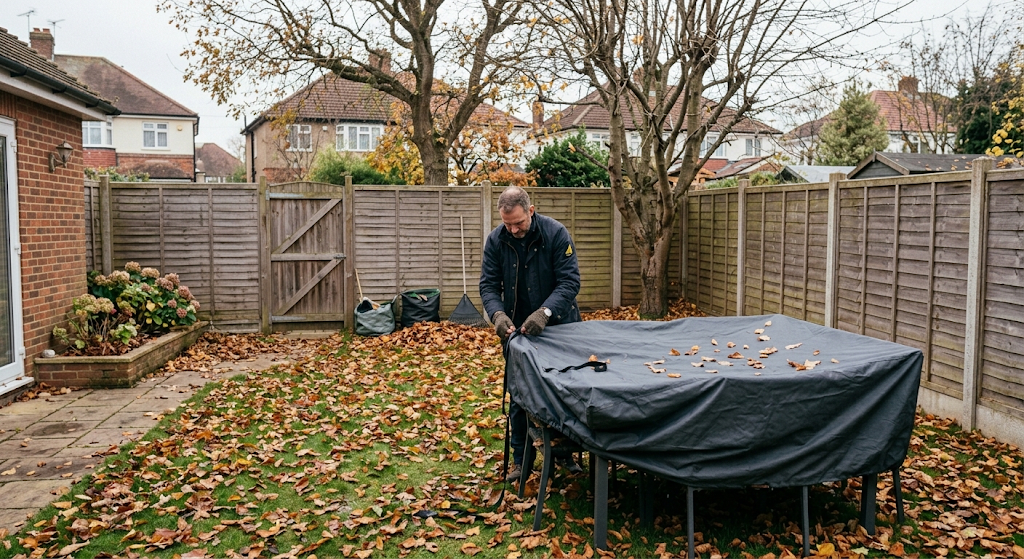
10. Check fences, gates and boundaries
Time: 20–30 minutes | Cost: Free to inspect | Panel replacement: £100-£150 each
Autumn storms are far harder on fences than anything summer throws at them. Check every post for movement at the base, look for warped or cracked panels, and check gate hinges are still secure. A fence that's already leaning in October rarely survives the first proper autumn gale.
Concrete spurs can extend the life of a weakening post if the rest of the panel run is otherwise sound, which is usually cheaper than a full fence replacement.
11. Clear drains, patios and paths of leaves and moss
Time: 1–2 hours | Cost: Free to inspect | Pressure washing: £80–£200
Wet leaves and moss make outdoor surfaces genuinely slippery, and a blocked drain cover during a heavy autumn downpour sends water somewhere it shouldn't go. Clear leaves and debris from drain covers and gullies, sweep or pressure-wash paths and patios, and check for any uneven paving that's become a trip hazard.
12. Put away garden furniture and equipment
Time: 1–2 hours | Cost: Cleaning supplies £10–£20
Clean garden furniture, barbecues and planters before storing them, and check for rust, rot or perished covers. Timber furniture benefits from a coat of oil before it's put away for the winter. If you've got a shed or outbuilding, check its roof, locks and flooring while you're out there. Felt shed roofs typically last 10–15 years, and a small leak spotted now is far cheaper than a ruined mower in spring.
Safety and security checks
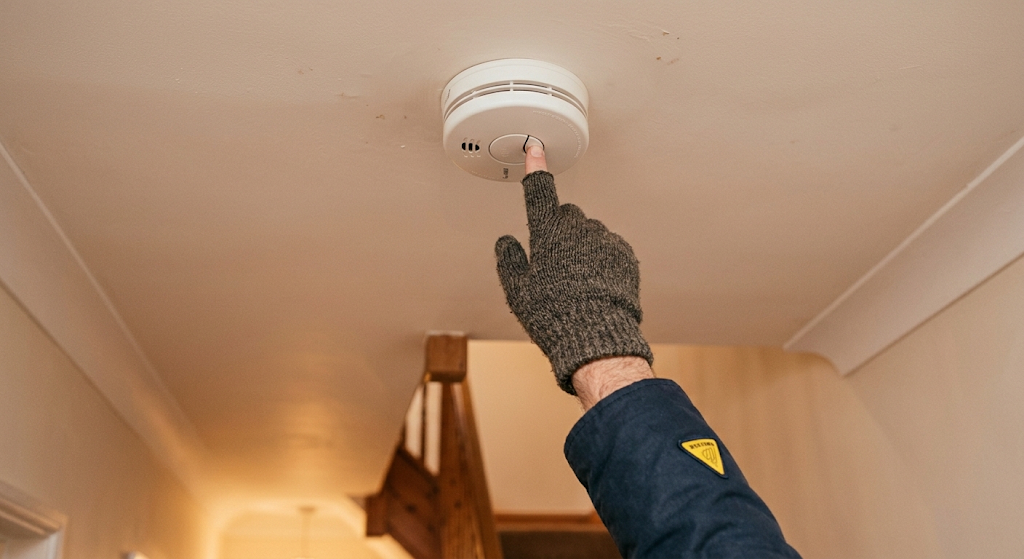
13. Test smoke and carbon monoxide alarms
Time: 10 minutes | Cost: Battery replacement £3–£8, new CO alarm £20–£40
Test every smoke alarm in the house and replace batteries where needed. Winter is when gas boilers, wood burners and open fires get used the most, which makes it exactly the wrong time to discover your carbon monoxide alarm has stopped working. If yours doesn't respond to the test button, replace it immediately. Most CO alarms last 5 to 7 years, so check the date printed on the unit.
14. Check outdoor lighting and locks
Time: 20–30 minutes | Cost: Free to test | Bulb/lock replacement: £10–£200 per fitting
As evenings draw in, working outdoor lighting becomes a genuine deterrent against opportunistic burglary, not just a convenience. Test security lights, porch lights and any PIR sensors. At the same time, check every lock on external doors, windows and side gates engages properly and keys turn smoothly. The Home Office recommends five-lever mortice deadlocks (BS 3621 compliant) on external timber doors.
15. Review your home insurance and find your stopcock
Time: 20–30 minutes | Cost: Free
Make sure your policy reflects your current property, including any completed work, new valuables or security upgrades. Most UK home insurance policies include a maintenance clause: failing to carry out reasonable upkeep, like clearing gutters or fixing a known leak, can be grounds to reduce or reject a claim. Keeping dated photos or receipts of the checks you've done this autumn protects you if you ever need to make one.
While you're at it, if you don't already know where your internal stopcock is, find it now. In a burst pipe emergency, being able to shut off the water supply within seconds is the single biggest factor in how much damage you end up with.
When to call a tradesperson
Some autumn jobs are simple DIY. Others need a qualified professional. Get expert help if you encounter any of the following:
A small professional job sorted in October is almost always cheaper than the emergency call-out and repair bill that follows a cold snap.
Alfie's final thought
Most of what goes wrong in a UK home over winter is entirely preventable. A boiler that's been serviced. A gutter that's been cleared. A pipe that's been lagged. None of it is expensive or difficult on its own. It just has to happen before the weather forces the issue, not after.
Set aside a weekend this month. Work through the list. Book anything you can't do yourself now, while tradespeople still have availability, rather than in December when everyone else has had the same idea.
If you need a hand with anything on this list, Alfie is here.
Frequently Asked Questions
Data sources: Hey Alfie internal job data, September–November 2025. External references: Checkatrade, HETAS, Energy Saving Trust, Association of British Insurers, Gas Safe Register.